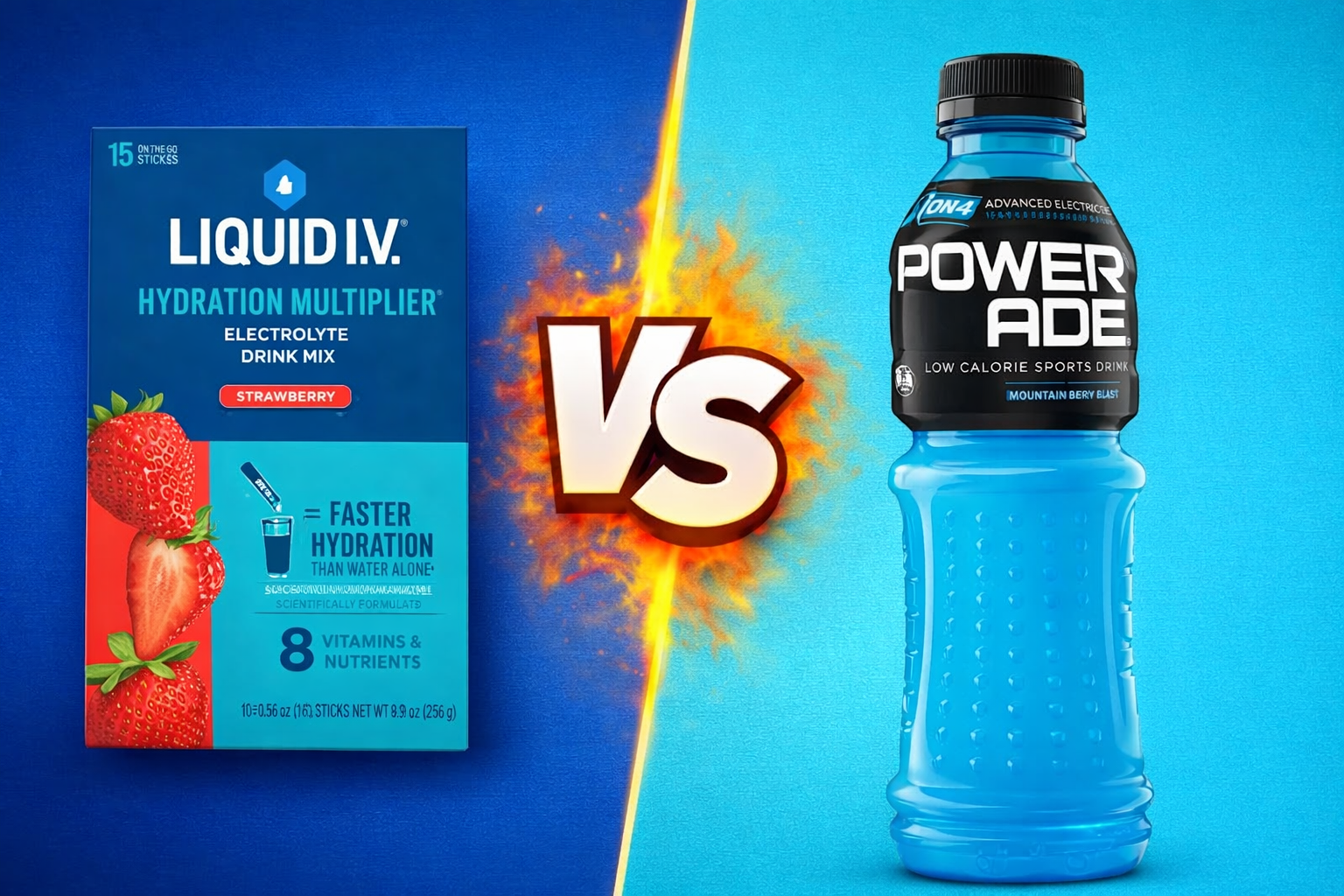
Staying hydrated sounds simple. Drink water, right? But if you’ve ever finished a hard workout, spent a day traveling, dealt with a stomach bug, or just felt completely drained for no obvious reason, you know plain water doesn’t always cut it.
That’s where drinks like Liquid I.V. and Powerade come in. Both promise faster, more effective hydration, but they go about it in very different ways. One is a powdered electrolyte mix built around hydration science. The other is a classic sports drink most people recognize from gym bags and locker rooms.
So which one actually helps you hydrate better? And more importantly, which one makes sense for your situation?
In this article, we’ll break down Liquid I.V. vs Powerade using real data, ingredient breakdowns, and practical use cases. No hype. No brand loyalty. Just a clear look at how they compare and when each one is worth reaching for.
What Is Liquid I.V.?
Liquid I.V. is a powdered hydration supplement designed to help your body absorb water faster and more efficiently than drinking water alone. Instead of coming ready-to-drink like a sports beverage, it comes in single-serve packets that you mix into water.
The brand is built around something called Cellular Transport Technology (CTT). In simple terms, this uses a specific ratio of sodium, glucose, and potassium to help water move from your gut into your bloodstream more quickly. It’s based on oral rehydration solutions that have been used in medical settings for decades.
One stick of Liquid I.V. mixed into about 16 ounces of water contains:
- 500 mg of sodium
- 370 mg of potassium
- 11 grams of sugar
- Around 45 calories
That sodium level is a big reason people turn to Liquid I.V. When you sweat heavily, get sick, or feel dehydrated after travel or alcohol, you’re losing electrolytes, not just water. Liquid I.V. is designed to replace those electrolytes fast.
Another thing worth noting is convenience. The packets are lightweight, shelf-stable, and easy to carry. A lot of people keep them in gym bags, backpacks, or travel kits for situations where hydration tends to slip.
Liquid I.V. is commonly used for:
- Intense workouts or long training sessions
- Travel and jet lag
- Illness, especially when fluids are hard to keep down
- Hangovers or dehydration-related fatigue
It’s not marketed as an everyday sipping drink. Instead, it’s positioned as a targeted hydration boost when your body needs more than plain water.
What Is Powerade?
Powerade is a ready-to-drink sports beverage designed to replace fluids and electrolytes lost during physical activity. It’s been around for years and is most commonly associated with workouts, sports practices, and games where people are sweating steadily over time.
Unlike Liquid I.V., Powerade doesn’t need to be mixed. You buy it bottled and drink it as-is, which makes it easy to grab before or after a workout. It uses a blend of water, carbohydrates, and electrolytes to support hydration and energy.
A standard 20 oz bottle of Powerade contains roughly:
- 300 mg of sodium
- 75 mg of potassium
- 34 grams of sugar
- About 130 calories
Powerade’s electrolyte levels are lower than Liquid I.V., but it contains more sugar, which serves a different purpose. The higher carbohydrate content helps provide quick energy during prolonged or high-intensity exercise, especially for athletes who are burning through glycogen.
Powerade is typically used for:
- Team sports and long practices
- Endurance workouts
- Situations where ongoing sipping makes sense
- Replacing fluids during steady sweating
Another thing to know is accessibility. Powerade is widely available at gas stations, grocery stores, vending machines, and gyms. It’s also usually cheaper per serving than hydration powders, especially when bought in multipacks.
In short, Powerade is less about rapid rehydration and more about maintaining hydration and energy during activity.
Which Is Healthier?
Liquid I.V. is generally the healthier option for most people.
In everyday situations, the body usually needs electrolytes more than extra sugar, and this is where Liquid I.V. stands out. It’s designed to improve hydration efficiency rather than provide quick energy.
Liquid I.V. offers:
- Lower sugar at 11 grams per serving
- Fewer calories, around 45
- Higher electrolyte levels, especially sodium and potassium
Powerade, in comparison, contains:
- 34 grams of sugar in a 20 oz bottle
- Significantly more calories
- Lower electrolyte concentration relative to its sugar content
Powerade’s higher sugar content can be useful during long or intense workouts, but outside of that context, it often delivers more sugar than the body needs. For regular use, that makes it a less balanced choice.
Overall, Liquid I.V. focuses on hydration without excessive sugar, which makes it the healthier pick in most situations. Neither drink should replace water for daily hydration, but when choosing between the two, Liquid I.V. has the nutritional advantage.
Which Is Better for Fast Hydration?
Liquid I.V. is better for fast hydration.
The main reason comes down to electrolyte concentration and absorption. Liquid I.V. is formulated using a specific balance of sodium, glucose, and potassium that helps the body absorb water more efficiently. This approach is similar to oral rehydration solutions used in medical settings, where the goal is to restore fluids quickly, not provide energy.
One serving of Liquid I.V. contains:
- 500 mg of sodium, which helps the body retain water
- 370 mg of potassium, supporting fluid balance inside cells
- A moderate amount of sugar to aid absorption without overwhelming the system
Powerade hydrates, but it works differently. Its electrolyte levels are lower, and its higher sugar content is aimed more at fueling activity over time rather than rapid rehydration. During intense exercise, this can be helpful, but when the goal is to rehydrate quickly, the extra sugar can actually slow things down.
Who Has More Flavor and Variety?
Powerade clearly wins when it comes to flavor variety.
Powerade has been around for decades, and flavor choice is one of its biggest strengths. It offers a wide range of bold, familiar flavors like Mountain Berry Blast, Fruit Punch, Grape, Orange, and several zero-sugar options. Because it’s a ready-to-drink beverage, the flavor is consistent and usually stronger, which appeals to people who want something that tastes more like a traditional sports drink.
Liquid I.V. takes a more limited and functional approach. Its flavors are lighter and often slightly salty due to the higher sodium content. Popular options include Lemon Lime, Passion Fruit, Strawberry, and a few specialty or seasonal flavors, but the overall selection is smaller compared to Powerade.
Which Is Better in Taste?
For most people, Powerade tastes better.
Powerade is designed to be easy and enjoyable to drink. It’s sweeter, smoother, and more familiar, especially if you’re used to sports drinks. The flavors are bold and consistent, and there’s no mixing involved, so you know exactly what you’re getting every time.
Liquid I.V. is more hit-or-miss on taste. Because it contains a higher amount of sodium, there’s a noticeable salty note, especially in certain flavors. Some people actually like this, particularly when they’re very dehydrated, but others find it less enjoyable or even hard to finish.
Which Is More Affordable?
Powerade is more affordable.
From a straight cost perspective, Powerade is cheaper and easier on the budget. A single 20 oz bottle typically costs a few dollars or less when bought in multipacks, and it’s widely available at grocery stores, gas stations, and convenience stores. For people who drink sports drinks regularly, those lower per-bottle prices add up to noticeable savings.
Liquid I.V. costs more per serving. The single-use packets are convenient, but they usually come at a higher price, especially when compared to buying bottled drinks in bulk. You’re paying for the concentrated formula, portability, and faster hydration benefits.
Overall Winner: Liquid I.V. vs Powerade
Liquid I.V. is the overall winner.
When you look at hydration speed, nutritional balance, and everyday usefulness, Liquid I.V. comes out ahead. It delivers more electrolytes with significantly less sugar and fewer calories, which makes it better suited for most hydration needs beyond basic water intake.
FAQ
Which Is Better for Weight Management?
Liquid I.V. fits better into weight-focused routines. It has fewer calories per serving and is usually consumed only when needed, not casually. Powerade is easier to overconsume because it’s sweet, bottled, and often treated like a regular drink, which can add unnecessary calories over time.
Which Is Better for People With High Blood Pressure?
Powerade may be the safer option for people who need to closely limit sodium. Liquid I.V. contains a high sodium load, which is effective for hydration but not ideal for frequent use if sodium intake needs to be controlled. In this case, moderation matters more than brand choice.
Which Is Easier on the Stomach?
Liquid I.V. is often easier to tolerate when dehydrated or nauseous because it’s consumed in smaller volumes and can be diluted. Powerade’s higher sugar concentration can feel heavy or cause stomach discomfort for some people, especially when sick.
Which Is Better for Desk Jobs or Low-Activity Days?
Neither is necessary, but if choosing one, Liquid I.V. makes more sense occasionally. Powerade provides energy that isn’t needed when activity is low, while Liquid I.V. can help if dehydration is coming from poor water intake, air travel, or long hours indoors.
Which Works Better When Diluted?
Liquid I.V. is more flexible. You can easily adjust the strength by adding more water, which helps with taste and sodium sensitivity. Diluting Powerade reduces both sugar and electrolytes at the same time, which can weaken its intended purpose.
Which Is Better for Hot Climates or Outdoor Work?
Liquid I.V. performs better when sweating heavily in hot conditions. It replaces electrolytes more efficiently and helps retain fluids. Powerade can still help, but it’s better suited for steady activity rather than rapid fluid loss from heat alone.
Which Is Better Before vs After Exercise?
Powerade works better during exercise when energy is being burned continuously. Liquid I.V. is more effective after exercise when the goal is restoring fluids and electrolytes rather than fueling performance.
Which Has Fewer Artificial Ingredients?
Liquid I.V. generally keeps ingredient lists shorter and avoids artificial colors found in many Powerade flavors. Powerade includes dyes and flavoring agents that some people prefer to limit.
Which Is Better for People Who Don’t Like Sweet Drinks?
Liquid I.V. is the better option. Its flavor is lighter and less sugary, especially when mixed with extra water. Powerade is noticeably sweet, which can be overwhelming for people sensitive to sugary drinks.
Which Is Better for Portability?
Liquid I.V. wins easily. Single-serve packets are lightweight, don’t spill, and can be carried anywhere. Powerade bottles take up space and aren’t as convenient for travel or daily carry.