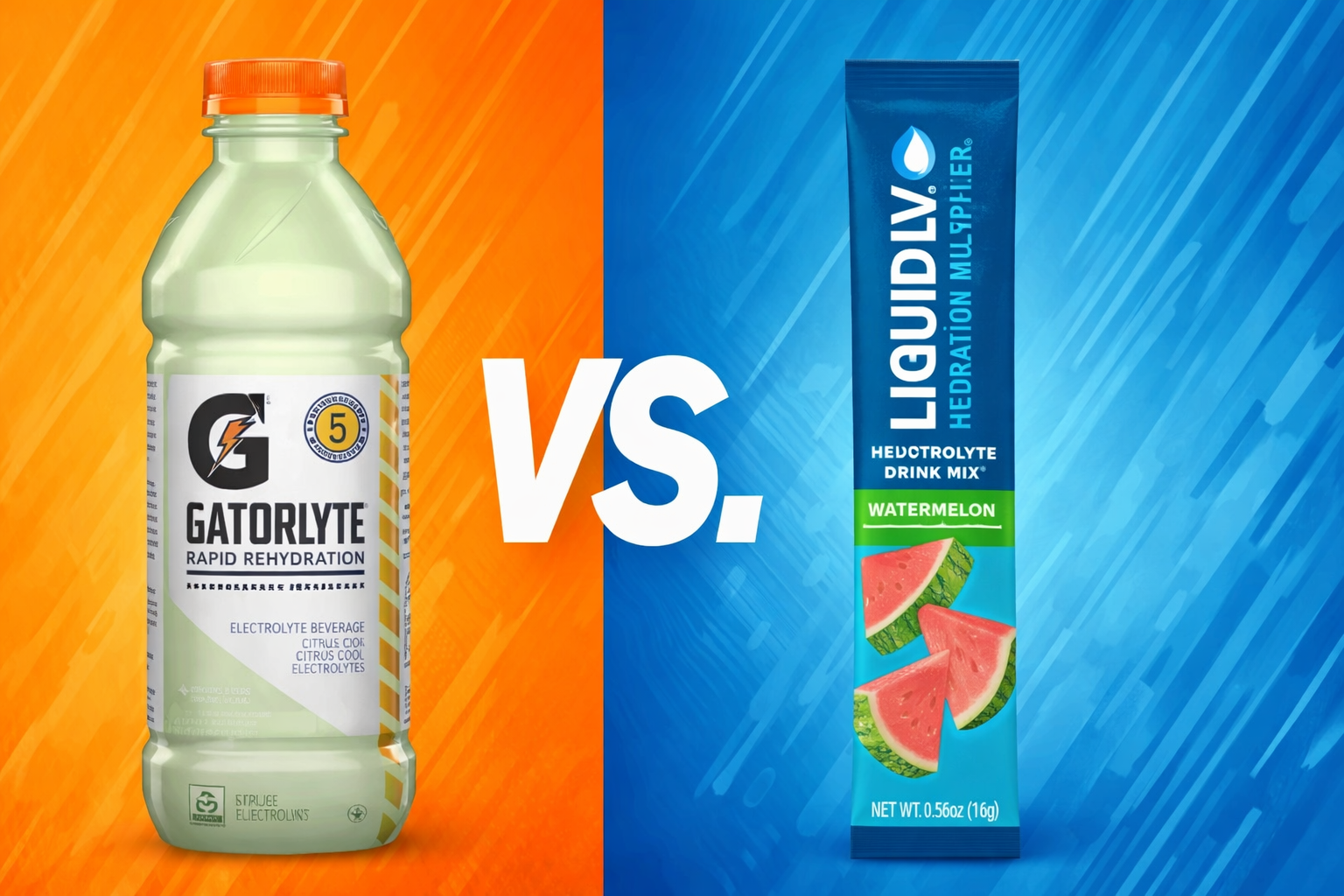
I didn’t used to think much about hydration. I figured if I drank enough water, I was fine. But after dealing with workouts, hot days, travel, and even the occasional illness, I realized hydration isn’t always that simple. Sometimes water alone doesn’t replace what your body actually loses.
That’s where hydration drinks come in, and also where things get confusing. There are powders, ready-to-drink bottles, low-sugar options, high-sugar options, and a lot of big claims about “hydrating faster” or “better than water.” It’s hard to know which ones really help and which ones are mostly marketing.
Two of the most talked-about options are Gatorlyte and Liquid I.V. Both are designed to support hydration beyond plain water, but they go about it in different ways. I’ve used both in real situations, not just once, and the differences matter.
In this comparison, I’ll answer three simple questions: which one hydrates better, who benefits most from each, and when it makes sense to choose one over the other.
What Is Gatorlyte?
Gatorlyte is Gatorade’s more serious, performance-focused hydration drink. It’s designed for rapid rehydration after heavy sweating, not casual sipping. Think hard workouts, hot weather, long days outside, or moments when you feel genuinely drained.
Unlike regular Gatorade, Gatorlyte puts much more emphasis on electrolytes and less on sugar. It comes ready to drink in a 20 oz bottle, which makes it convenient when you don’t want to mix powders or measure anything.
Electrolyte profile per 20 oz serving:
- Sodium: ~490 mg
- Potassium: ~350 mg
- Chloride: ~690–1,040 mg
- Magnesium: ~95–105 mg
- Calcium: ~100–120 mg
- Sugar: ~10–12 g
What stood out to me is that Gatorlyte uses a five-electrolyte blend: sodium, potassium, chloride, magnesium, and calcium. That’s more complete than many sports drinks that focus mostly on sodium.
The sugar content is also lower than traditional sports drinks. It’s still there, but not overwhelming. For me, that made it feel more functional and less like I was drinking something just for flavor.
Overall, Gatorlyte feels built for situations where hydration needs to work fast and actually stick, especially after a lot of sweating or fluid loss.
What Is Liquid I.V.?
Liquid I.V. is a powdered hydration mix that you add to water. Its main selling point is something it calls Cellular Transport Technology (CTT®), which is meant to help water and electrolytes absorb more efficiently using a mix of sodium, glucose, and potassium.
Instead of being ready to drink like Gatorlyte, Liquid I.V. comes in single-serve sticks that you mix into a bottle of water. That makes it easy to carry around and use on the go, especially for travel or long days.
Electrolyte profile per 1 stick (mixed with water):
- Sodium: ~500 mg
- Potassium: ~370–380 mg
- Chloride: ~0 mg in the basic formulation
- Magnesium: ~0 mg
- Calcium: ~0 mg
- Carbohydrates: ~11 g, including ~10 g of sugar
Liquid I.V.’s basic Hydration Multiplier relies mostly on sodium and glucose rather than a full mineral blend. It also includes added vitamins, such as vitamins C, B3, B5, B6, and B12, which are meant to support energy and overall wellness.
In use, Liquid I.V. feels more like a portable hydration boost you can mix anywhere. It leans on sugar and sodium to drive absorption rather than a broader electrolyte profile, which becomes an important difference when you compare it directly to Gatorlyte.
Hydration Effectiveness
This is where the two products take clearly different approaches.
Gatorlyte focuses on replacing what you actually lose in sweat. With its five-mineral blend of sodium, potassium, chloride, magnesium, and calcium, it delivers a higher total electrolyte load in one serving. For me, that meant faster relief from dehydration symptoms like dry mouth, low energy, and that heavy, worn-out feeling after sweating a lot. It felt like my body was getting back what it lost, not just pulling water in.
Liquid I.V. takes a different route. It relies on a sodium-glucose combination to help water absorb more efficiently in the gut, which is what it refers to as Cellular Transport Technology. In practice, this can help water uptake quickly, especially if you’re starting out dehydrated and need something portable to mix fast.
Key insight:
Even though Liquid I.V. has strong sodium and potassium numbers, Gatorlyte’s total electrolyte content can be higher overall because it includes more mineral types. For me, that made Gatorlyte feel more complete when hydration needed to last, while Liquid I.V. felt more like a quick absorption boost rather than full electrolyte replacement.
Electrolyte and Sugar Content
Putting the numbers side by side helped me understand why these two felt different once I actually used them.
Per serving, the sodium and potassium are pretty similar. Gatorlyte has about 490 mg of sodium and 350 mg of potassium per 20 oz bottle, while Liquid I.V. comes in around 500 mg of sodium and 370–380 mg of potassium per stick mixed with water. On paper, that part looks almost even.
Where things really separate is everything else.
Gatorlyte also includes:
- Chloride: ~690–1,040 mg
- Magnesium: ~95–105 mg
- Calcium: ~100–120 mg
Liquid I.V.’s basic Hydration Multiplier doesn’t include chloride, magnesium, or calcium at all. It relies mainly on sodium, potassium, and sugar to drive hydration.
Speaking of sugar, both are surprisingly close there too. Gatorlyte has about 10–12 grams of sugar, and Liquid I.V. has roughly 10–11 grams per serving. Neither one is low-sugar, but neither is overloaded compared to traditional sports drinks.
For me, the takeaway was this: even though the sugar and main electrolytes look similar, Gatorlyte delivers a broader and heavier electrolyte load overall. Liquid I.V. feels more targeted, while Gatorlyte feels more complete when I’m replacing a lot of what I’ve lost.
Sweeteners Used
The sweetening approach is pretty straightforward with both, but there are some small differences worth noting.
Gatorlyte uses real sugar for taste and to support absorption. There are no artificial sweeteners, which I appreciated. The sweetness felt mild and functional, not syrupy or heavy. It tasted more like a hydration drink than something made just to be sweet.
Liquid I.V. uses a cane sugar and glucose mix, which ties into its Cellular Transport Technology approach. Some varieties also include stevia, depending on the flavor. In my experience, Liquid I.V. tasted noticeably sweeter than Gatorlyte, especially when mixed with less water.
Both rely on sugar to help with hydration rather than artificial sweeteners. The difference is in intensity. Gatorlyte felt more balanced and less sweet, while Liquid I.V. leaned sweeter to support its absorption model and flavor profile.
Ingredient Cleanliness
Looking at the ingredient lists, both products are fairly clean, but they take different approaches.
Gatorlyte sticks closely to a sports science style formula. It focuses on essential minerals plus sugar, without piling on extras. Most variants don’t use artificial flavors or artificial sweeteners, which keeps the formula simple and functional. To me, it felt like everything in the bottle had a clear purpose tied to hydration.
Liquid I.V. adds more on top of hydration. Along with electrolytes and sugar, it includes added vitamins to support broader health claims. It also avoids artificial colors, which is a plus. The tradeoff is a slightly more complex ingredient list, with sugar still playing a central role.
In short, Gatorlyte feels more stripped down and hydration-first, while Liquid I.V. blends hydration with added wellness ingredients. Which one feels “cleaner” depends on whether you prefer a focused formula or extra vitamins mixed in.
Health & Wellness Benefits
From a basic health standpoint, both Gatorlyte and Liquid I.V. cover the essentials, but they support the body in slightly different ways.
Electrolyte balance
Both provide sodium and potassium, which are the two big ones when it comes to hydration. They help your body retain fluids and support normal nerve and muscle function. That’s the baseline, and both products handle that well.
Liquid I.V. additional benefits
Liquid I.V. adds B vitamins and vitamin C, which are meant to support energy metabolism and immune function. Personally, I noticed this more as a general wellness add-on rather than something that directly affected hydration. It can be nice if you’re run down or traveling, but it didn’t replace the need for solid electrolyte balance for me.
Gatorlyte additional benefits
Gatorlyte doesn’t add vitamins, but it makes up for that with greater mineral diversity. The inclusion of chloride, magnesium, and calcium helped create a more complete electrolyte profile. In my experience, this mattered more when I was sweating heavily or feeling depleted. It felt steadier and more physically supportive, especially for muscles and overall balance.
For me, Liquid I.V. leans a bit more toward hydration plus wellness extras, while Gatorlyte stays focused on restoring electrolyte balance as completely as possible. Which one feels better really depends on whether you value added vitamins or a broader mineral profile.
Cost & Value Comparison
Price is another place where the difference between these two shows up pretty clearly.
On average, Gatorlyte costs about $2.67 per 20 oz bottle, depending on where you buy it. Liquid I.V. comes in cheaper at roughly $1.56 per packet, especially if you buy a multi-pack.
At first glance, Liquid I.V. looks like the better deal. It’s more affordable per serving and easier to stock up on. If you’re using it regularly for everyday hydration and like the added vitamins, that lower price adds up in a good way.
For me, Gatorlyte made more sense as a targeted tool. I didn’t use it every day. I reached for it after intense workouts, long days in the heat, or when I was clearly dehydrated. In those situations, the higher price felt justified because it delivered a stronger, more complete electrolyte hit in one bottle.
So value really depends on how you use it. Gatorlyte offers better value for intense, occasional hydration needs, while Liquid I.V. makes more sense if you want a more affordable option for regular use with added vitamins.
Overall Winner
If I had to choose one overall winner, I’d give the edge to Gatorlyte.
The deciding factor for me was hydration effectiveness. The broader electrolyte profile and higher total mineral content made it feel more complete, especially after heavy sweating, workouts, or long days in the heat. When I was actually dehydrated, Gatorlyte helped me feel better faster and stay hydrated longer.
That said, Liquid I.V. still has a place. It’s more affordable, easy to carry, and the added vitamins can be a nice bonus for regular use. But when the goal is pure hydration and electrolyte replacement, not just convenience or wellness extras, Gatorlyte performed better for me.
So if I’m picking one for real-world hydration that needs to work, Gatorlyte comes out on top.