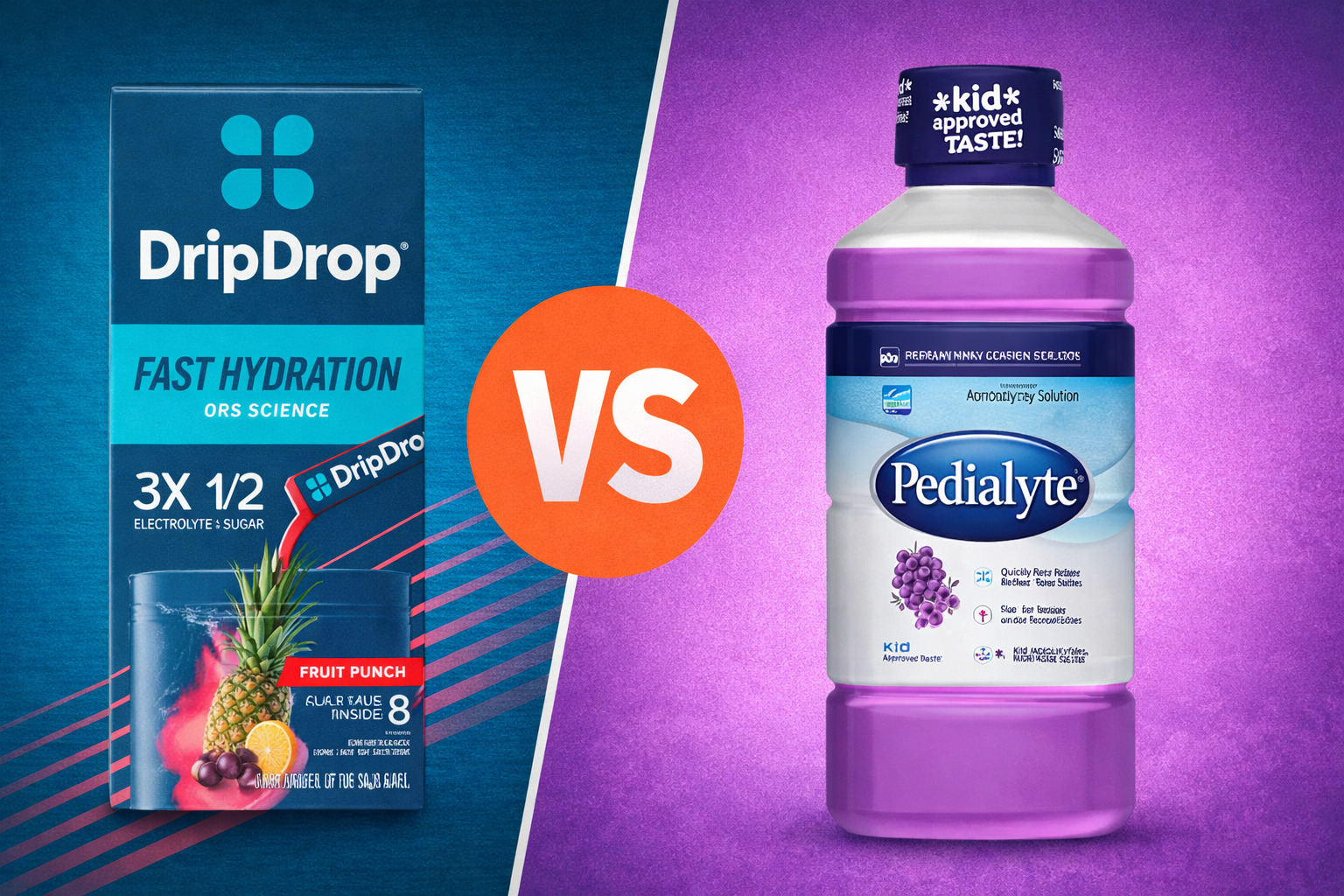
I didn’t start comparing DripDrop and Pedialyte because I love electrolyte drinks. I started because I was tired of feeling wiped out after long days, travel, and the occasional stomach bug, even when I thought I was “hydrating enough.” Water alone wasn’t cutting it, so I began paying attention to what actually helped me recover faster.
Pedialyte was the first thing I reached for. It’s been around forever and most of us associate it with dehydration and sickness. DripDrop came later, recommended to me as something designed with medical-grade hydration in mind, not just for kids or emergencies. After using both in real situations, workouts, flights, and days when dehydration was obvious, the differences became hard to ignore.
This comparison isn’t about which brand sounds better on paper. It’s about how each one actually performs, what’s inside them, and why those details matter when your body genuinely needs electrolytes, not just flavored water.
What Is DripDrop?
I first came across DripDrop when I was looking for something stronger than typical sports drinks but less medical-feeling than oral rehydration solutions used in hospitals. DripDrop is an electrolyte powder designed to treat dehydration efficiently, not just add flavor to water.
It was developed by a physician and follows the science behind oral rehydration therapy (ORT), the same approach recommended by the World Health Organization for dehydration. The idea is simple: combine sodium, glucose, and potassium in specific ratios so your body absorbs fluids faster instead of flushing them out.
A single packet of DripDrop mixed with water contains:
- About 330 mg of sodium
- Around 7 g of sugar
- Potassium for electrolyte balance
That balance matters. Sodium helps pull water into the bloodstream, while a small amount of glucose improves absorption in the intestines. When I looked at the label, it explained why DripDrop felt more effective for me during heavy dehydration, especially after sweating, travel, or illness.
DripDrop is marketed mainly toward adults, athletes, travelers, and anyone dealing with moderate dehydration. It comes in small packets, which made it easy for me to carry and use when I actually needed it, instead of committing to a full bottle upfront.
What Is Pedialyte?
Pedialyte was the first electrolyte drink I ever used, long before I thought about hydration in any serious way. Most people know it as the go-to drink for kids when they’re sick, but over time I realized it’s used just as often by adults dealing with dehydration.
Pedialyte is an oral rehydration solution (ORS) designed to replace fluids and electrolytes lost through vomiting, diarrhea, fever, or heat. Like DripDrop, it’s built around the science of oral rehydration, but it’s formulated to be gentler and more broadly accessible.
A typical serving of Pedialyte contains:
- About 240–260 mg of sodium
- Around 6 g of sugar
- Potassium and zinc to support electrolyte balance and recovery
The sodium level is lower than DripDrop, which I noticed in how it felt. Pedialyte worked well for mild to moderate dehydration, especially when I wanted something easy on the stomach. It didn’t feel as aggressive, but it also didn’t always feel as fast-acting when I was seriously depleted.
Pedialyte is widely available in ready-to-drink bottles, freezer pops, and powder packets, which makes it especially popular for children and during illness. For me, it felt more like a safe, dependable option when dehydration was related to sickness rather than sweat-heavy or physically demanding situations.
Which One Is Healthier?
Short answer: neither is healthier in every situation.
DripDrop is healthier when you’re more dehydrated and need faster electrolyte replacement because it has higher sodium. Pedialyte is healthier for milder dehydration or illness since it’s gentler and easier to sip over time.
The real difference isn’t the ingredients. It’s how much your body actually needs. Used correctly, both are healthy. Used casually, neither is.
For fast hydration
From my experience, DripDrop works quicker when I’m genuinely dehydrated. It has a higher sodium content and is formulated to pull water into the bloodstream faster, which is why it’s often used for heavy sweating, travel, or heat-related dehydration.
Pedialyte still works well, but it feels slower and more gradual. It’s better when dehydration is mild or when your stomach is sensitive, like during illness.
If the goal is speed, DripDrop wins.
Who has more variety.
Pedialyte clearly wins when it comes to options. It comes in ready-to-drink bottles, powder packets, freezer pops, and multiple formulations, including classic, low-sugar, and sport versions. There are also more flavor choices, which matters if you’re drinking it over several hours or giving it to kids.
DripDrop keeps things simpler. It’s mainly sold as powder packets with fewer flavors, and it’s clearly aimed at adult use and efficiency rather than choice.
For taste
From my experience, Pedialyte is easier to drink, especially over time. The flavors are milder and smoother, and it doesn’t have that strong salty hit. That makes it more approachable when you’re sick or sipping slowly.
DripDrop tastes stronger and saltier. I didn’t mind it when I was really dehydrated, because it felt purposeful, but it’s not something I’d drink casually for the flavor.
If taste is your top priority, Pedialyte wins. If effectiveness matters more than flavor, DripDrop still does its job.
Which is usually more affordable.
When I compared the cost based on how much hydration I was actually getting, DripDrop came out cheaper. The powder packets cost less per serving, especially when bought in multi-packs, and you’re not paying for bottled liquid or packaging.
Pedialyte tends to cost more, mainly because it’s often sold as ready-to-drink bottles. You’re paying for convenience, packaging, and distribution, not just the electrolytes.
So if affordability matters and you’re okay mixing it yourself, DripDrop is the better value.
Overall winner: DripDrop
Based on my experience, DripDrop comes out ahead overall. It hydrates faster, has a stronger electrolyte formula, and is more affordable per serving. When dehydration is real, from travel, heat, or heavy sweating, it simply works better.
Pedialyte still has its place. It tastes better, offers more variety, and is easier to sip during illness or mild dehydration. But when I look at effectiveness, value, and results, DripDrop delivers more where it counts.
If I had to pick just one for most situations, DripDrop would be my choice.
FAQs: DripDrop vs Pedialyte
Can adults drink Pedialyte, or is it just for kids?
Adults can absolutely drink Pedialyte. I’ve used it myself during illness or mild dehydration. It’s safe and effective for all ages, it’s just marketed more toward children and families.
Is DripDrop safe to use every day?
I wouldn’t use DripDrop daily unless there’s a real reason. It’s designed for dehydration, not casual hydration. Using high-sodium electrolyte drinks regularly when you don’t need them isn’t ideal.
Which one is better for workouts or sweating?
DripDrop works better for workouts and heavy sweating. The higher sodium content helped me recover faster when I lost a lot of fluids through sweat.
Which is better during illness or stomach issues?
Pedialyte felt easier on my stomach. When dehydration came from sickness rather than sweating, I could sip it slowly without feeling overwhelmed.
Does sugar make one less healthy than the other?
No. Both contain sugar on purpose. Without it, electrolytes don’t absorb as efficiently. The key is using them when needed, not drinking them casually like water.
Which one is better for travel?
DripDrop is more convenient for travel. The small packets are easy to pack, and I didn’t have to carry heavy bottles or worry about spills.
Which option lasts longer once opened or mixed?
Pedialyte bottles need to be refrigerated after opening and used within a short time. DripDrop packets stay shelf-stable until mixed, which made them easier for me to store and use as needed.
Which should you choose if you’re mildly dehydrated?
For mild dehydration, Pedialyte makes more sense. It’s gentler and doesn’t feel excessive.
Which should you choose for severe dehydration?
For more serious dehydration, DripDrop worked better and faster for me.